


CASE STUDY
Scaling 50+ Healthcare Websites
Designing a Unified Digital Ecosystem for Radiology Practices
Role: Lead UX Designer
Team: Digital Experience
Timeline: 2022–Present
Scope: Design system development, information architecture, WordPress implementation, accessibility governance, multi-site UX strategy
Designing a scalable digital system across 50+ local healthcare brands
2023 — Original RP Sun City Website, homepage

2025 — Redesigned RP Sun City Website, homepage
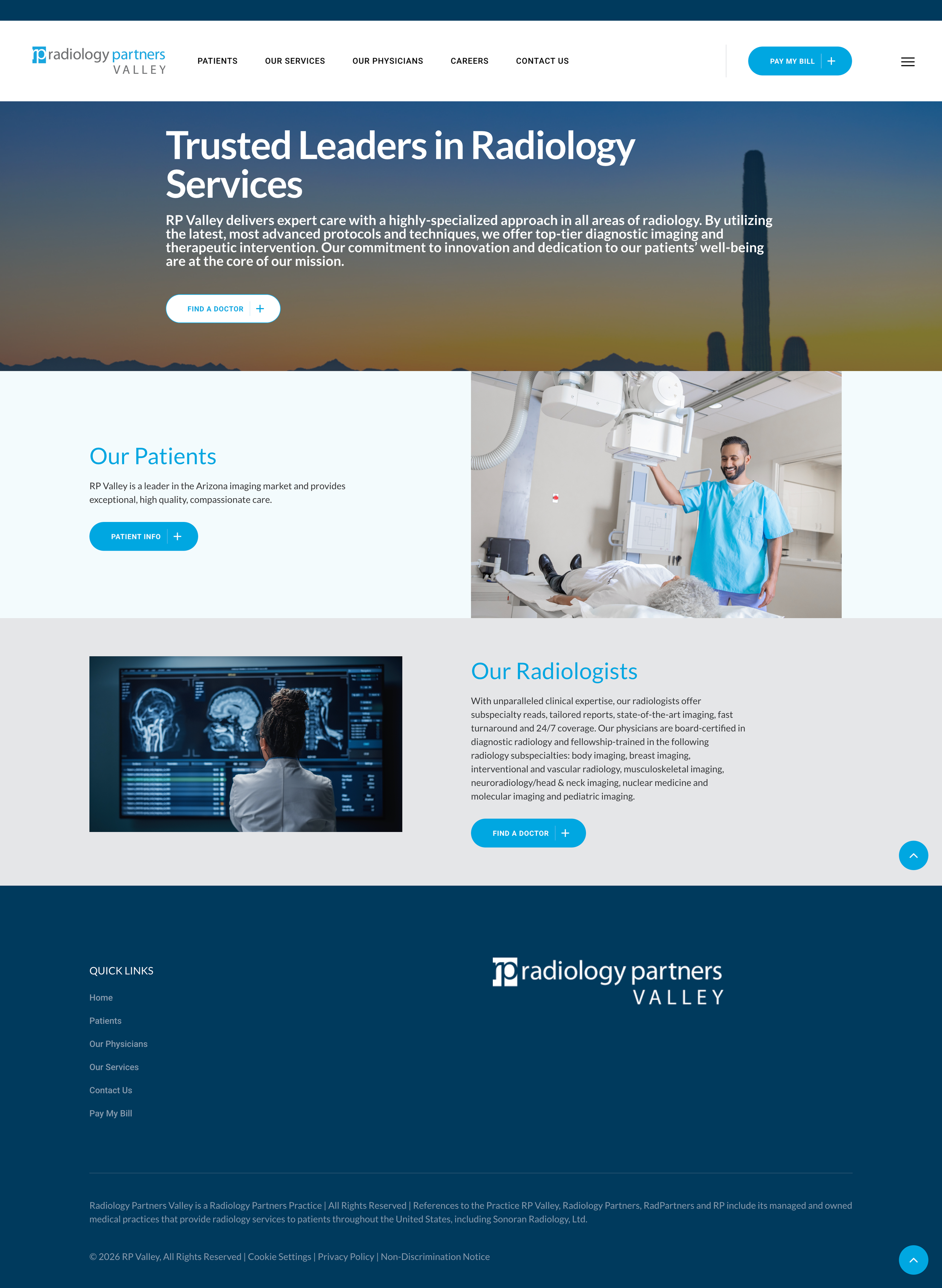
Radiology Partners operates dozens of regional radiology practices across the United States. Each practice maintains its own identity and serves a local patient community, while also being part of a national organization.
As the organization expanded rapidly through acquisitions, the digital ecosystem became fragmented. Websites were built by different vendors, hosted on different platforms, and designed with inconsistent UX patterns.
My role was to bring these sites into a unified, scalable system that improved usability, accessibility, and brand cohesion while still allowing each practice to retain its local identity.
The Challenge
When I inherited the ecosystem, the websites had grown rapidly alongside Radiology Partners' expansion. Many were externally hosted and managed by different vendors.
This resulted in several UX challenges:
• Inconsistent navigation patterns across practices
• Outdated UX and visual clutter that made key tasks difficult
• Poor accessibility standards across many sites
• Fragmented brand identity despite being part of the same organization
• Vendor dependency for even minor updates
While each practice needed to maintain its local identity, the experience also needed to feel cohesive and trustworthy as part of a national healthcare organization.
The challenge was to create a scalable digital framework that balanced consistency with local flexibility.
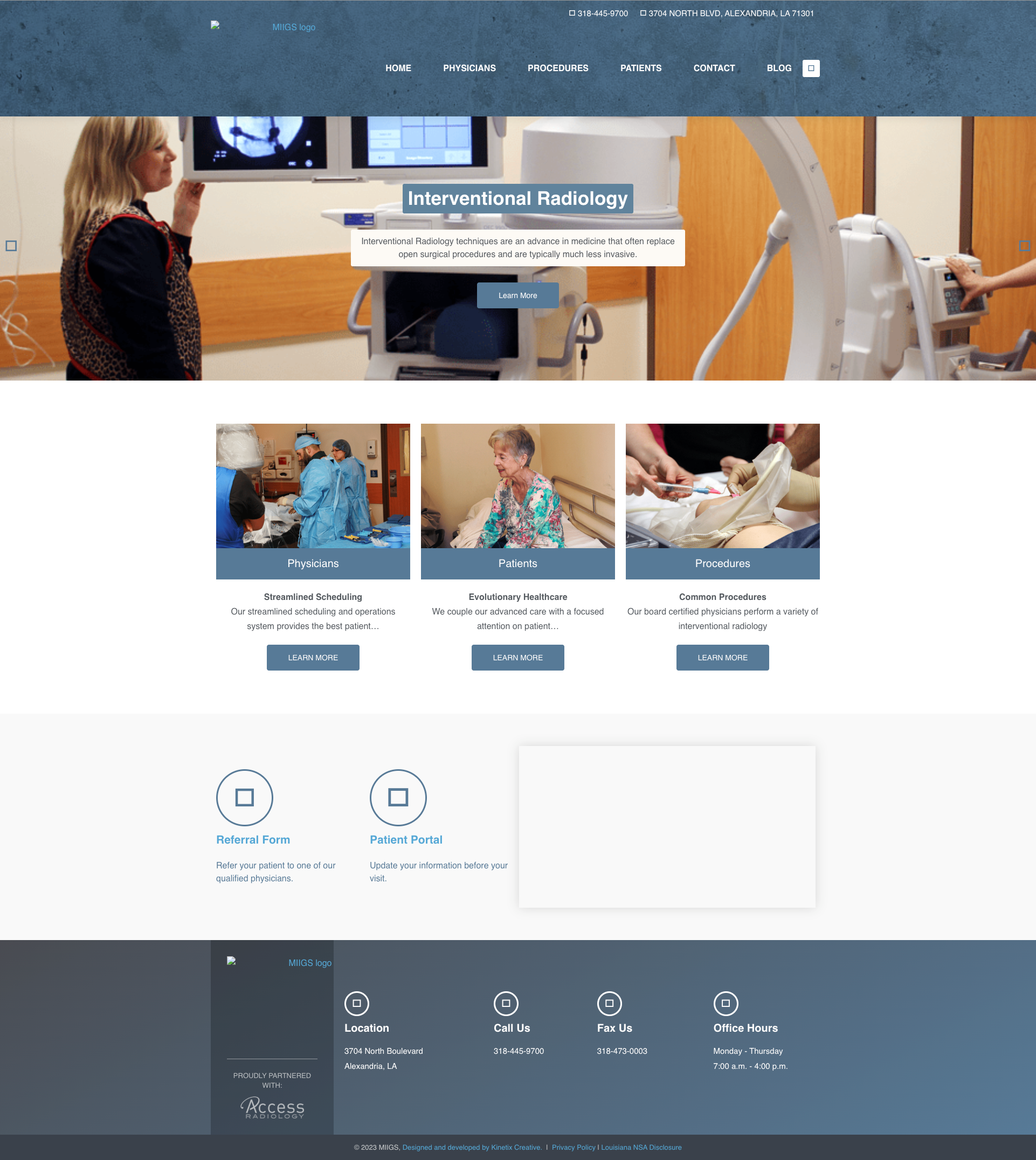
2024 — Original MIIGS Website
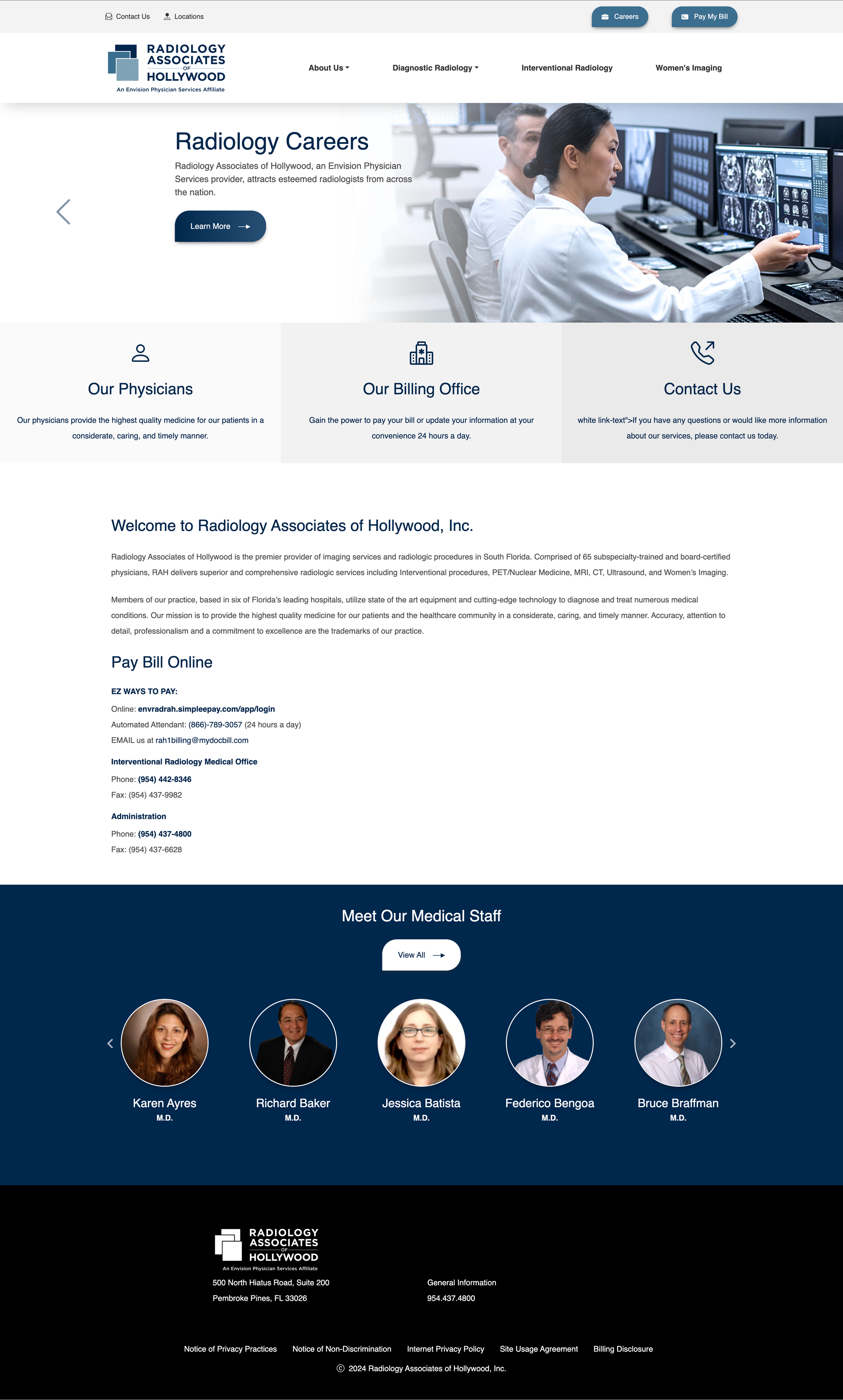
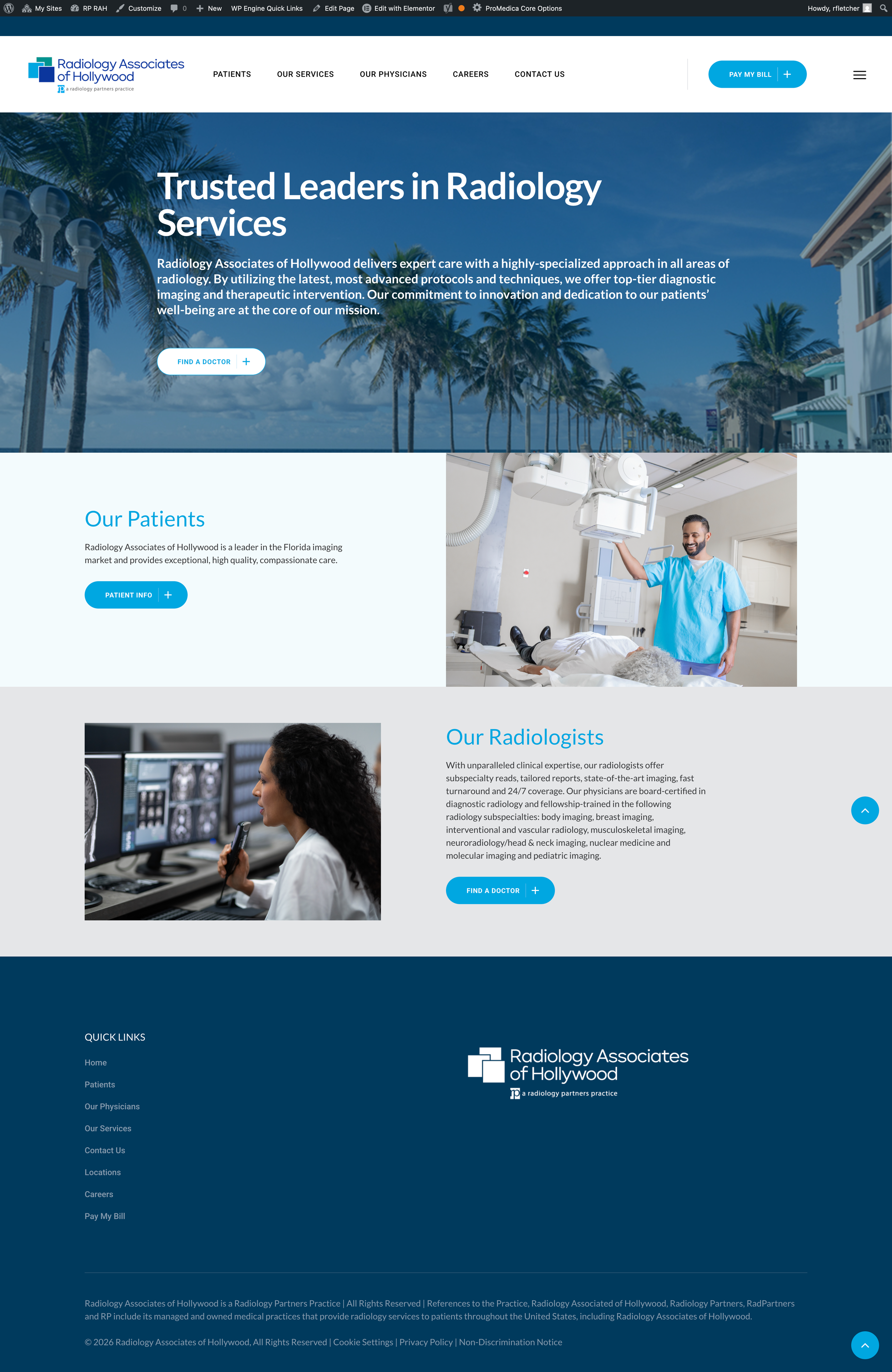
2025 — Original Radiology Associates of Hollywood Website
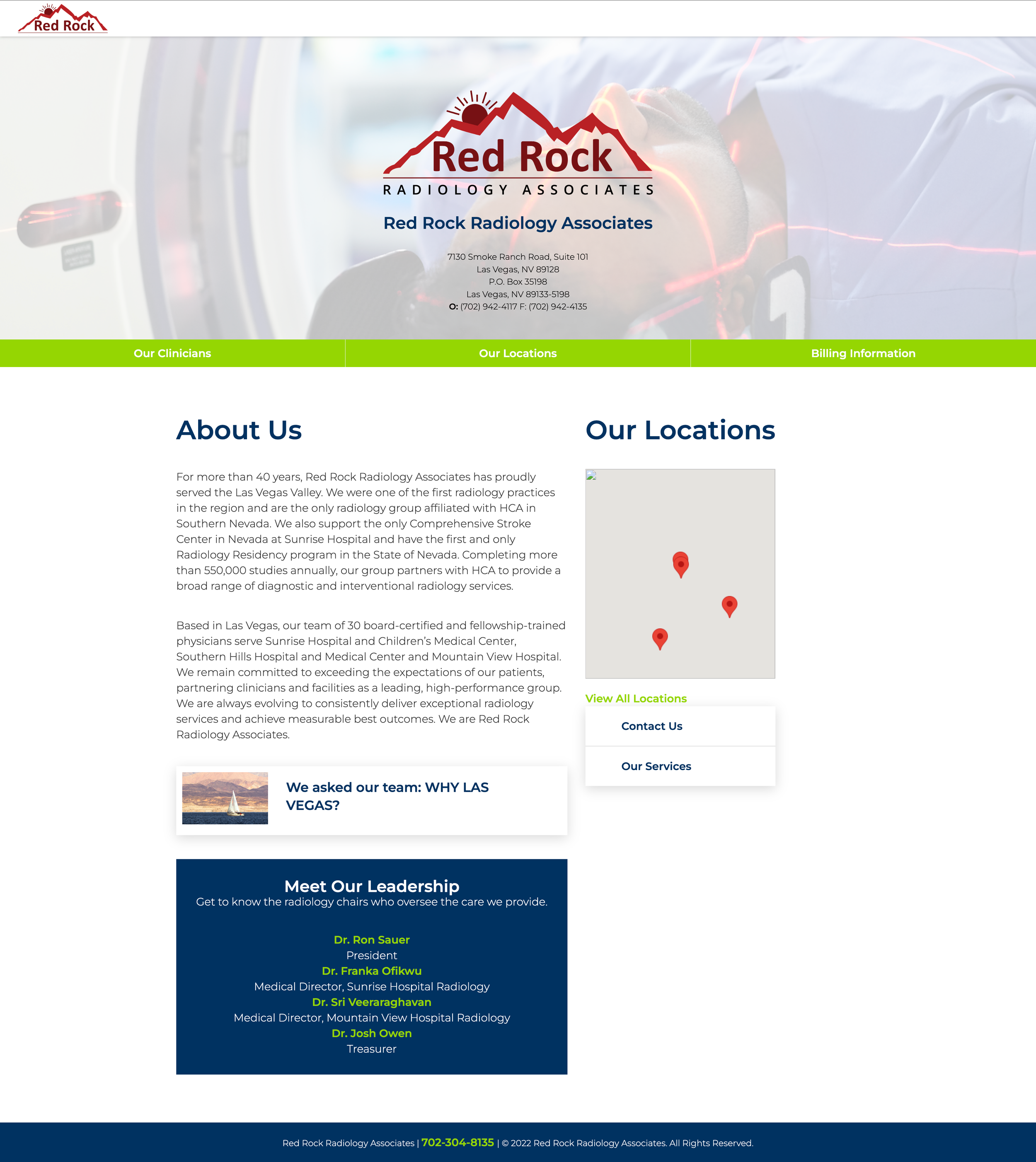
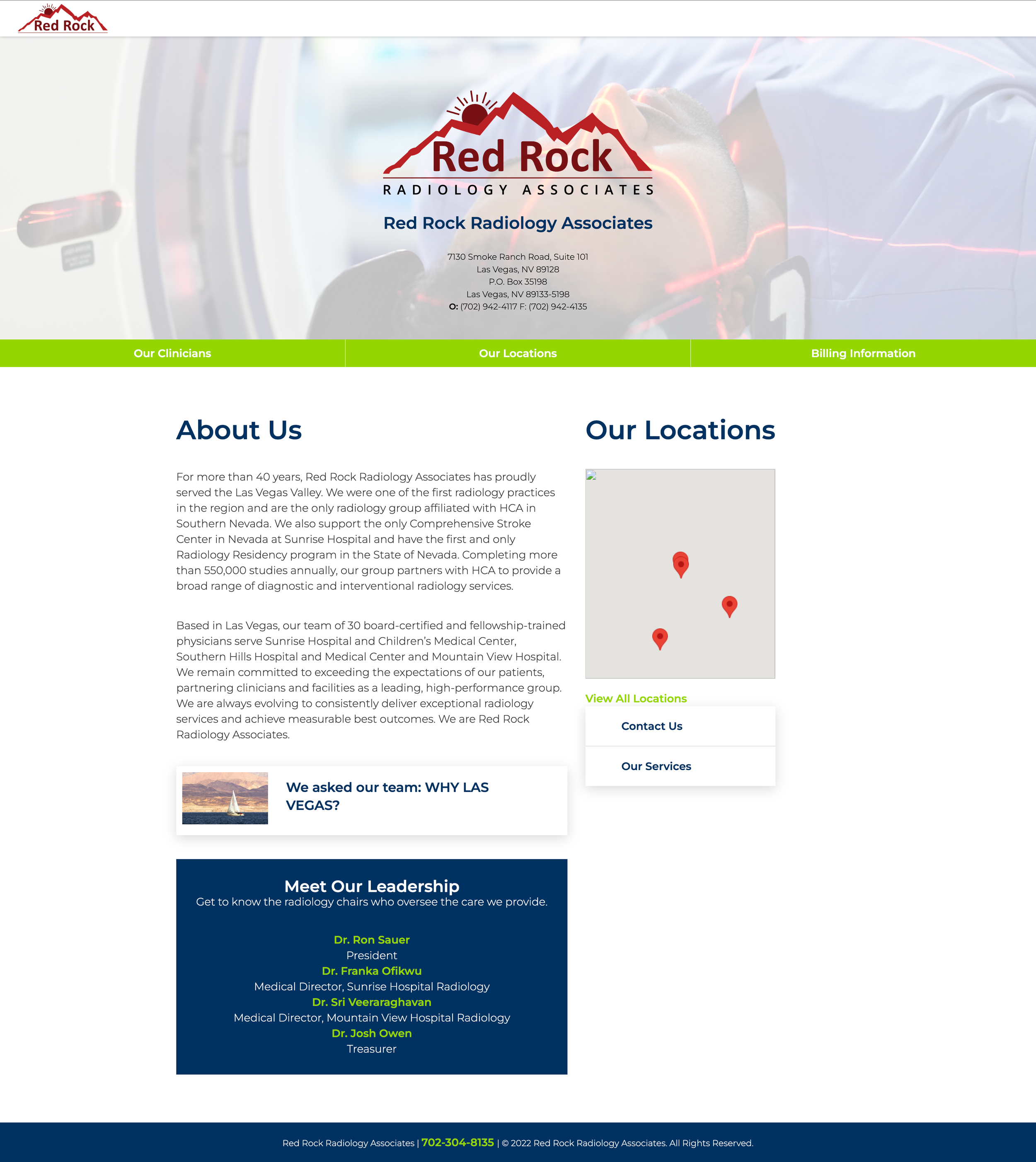
2025 — Original Red Rock Radiology Website
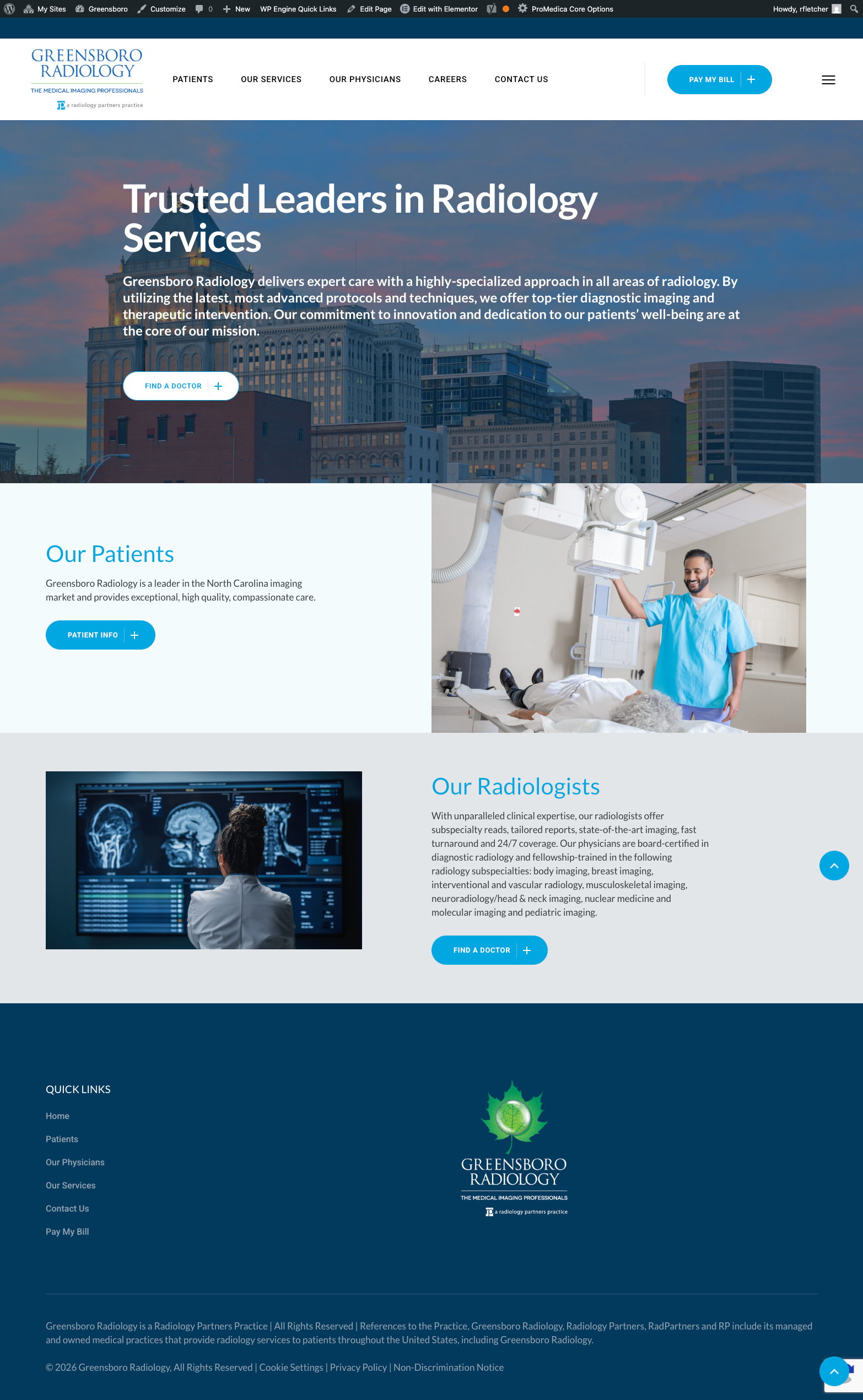
2025 — Original Greensboro Radiology Website
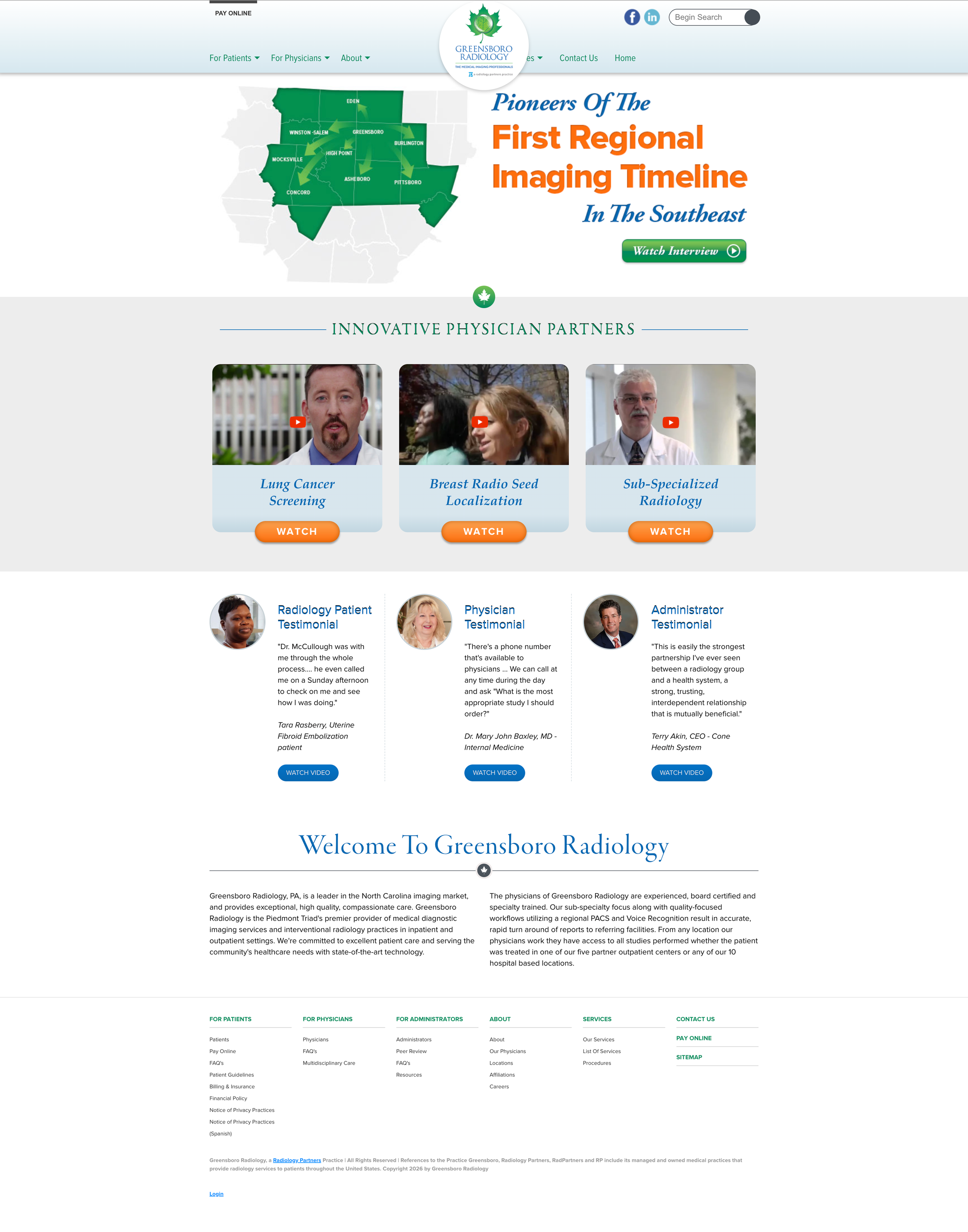
Rather than redesigning each website individually, I focused on creating a scalable UX framework that could support dozens of practices.
The approach centered on three priorities:
Strategy
1. Standardize core user journeys
Across all practices, patients typically need to:
Pay a bill
Contact the practice
Find a location
Learn about services
I restructured navigation and page layouts to prioritize these high-value tasks, ensuring they were consistently accessible across all sites.
2. Create reusable page templates
Templates included:
Homepage
Locations
Services / Treatments
Careers
Contact pages
Billing support
These templates created consistent UX patterns, while still allowing practices to customize sections such as:
treatment information
community messaging
career culture pages
FAQs
3. Establish accessibility standards
Many of the inherited websites did not meet modern accessibility expectations.
I implemented accessibility improvements including:
alt text standards for images
improved heading hierarchy
improved color contrast
clearer navigation structures
better link clarity and interaction patterns
Accessibility is now a core requirement for new practice sites entering the ecosystem.
2025 — Original Red Rock Radiology homepage
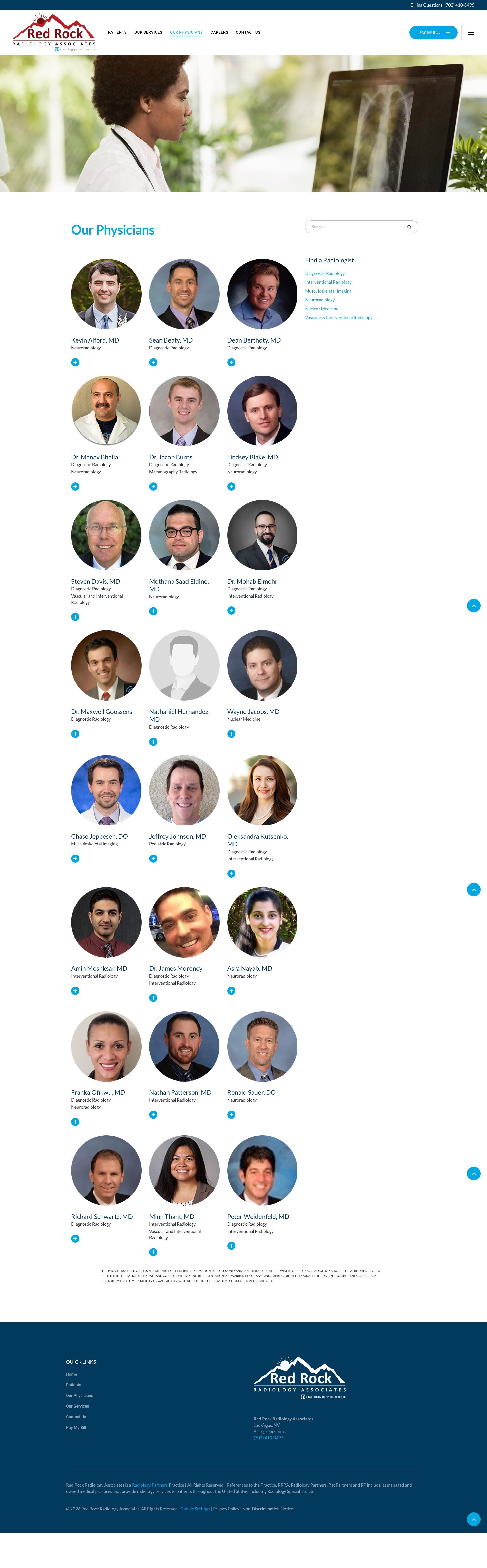
2026 — Redesigned Red Rock Radiology homepage
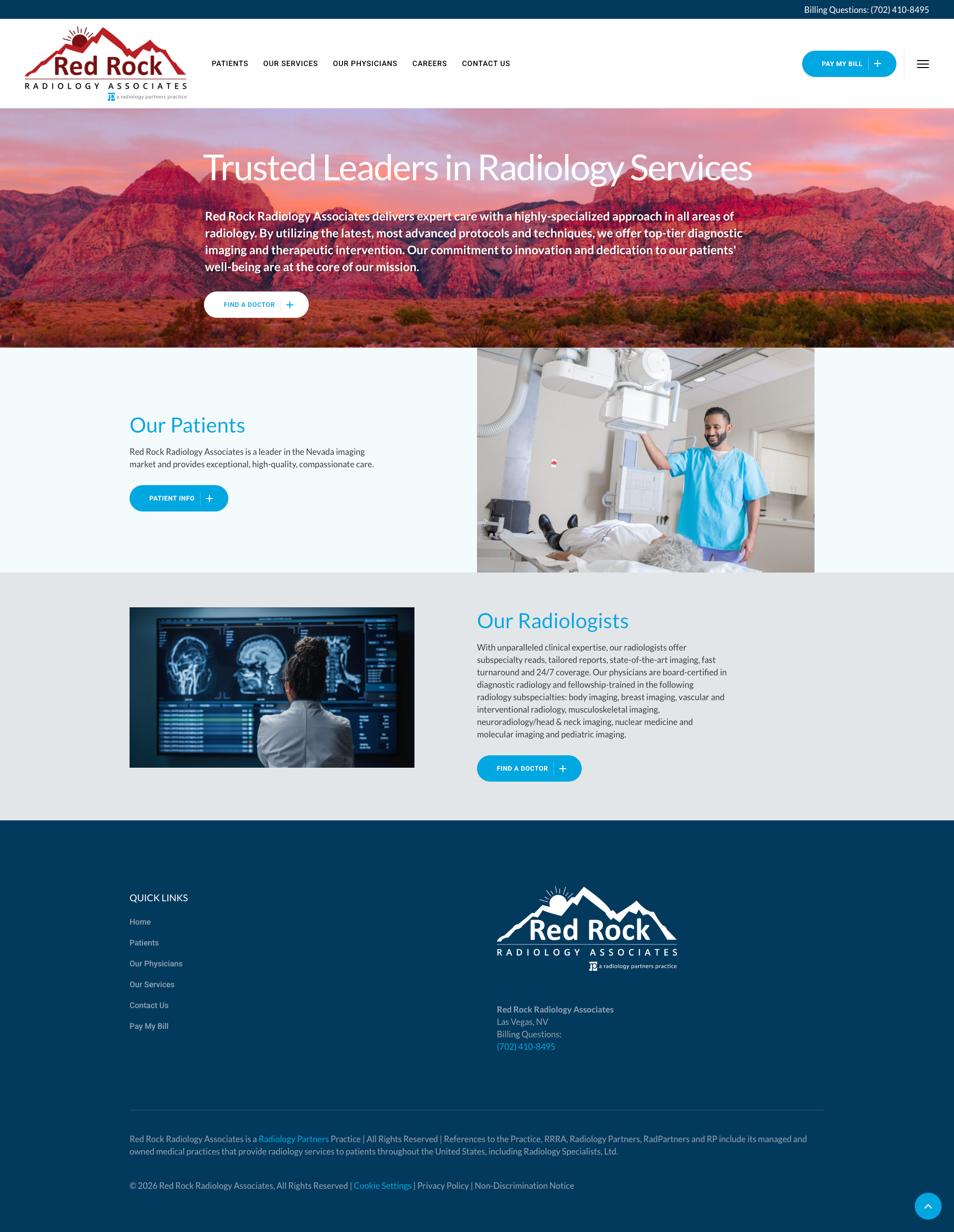
Home page
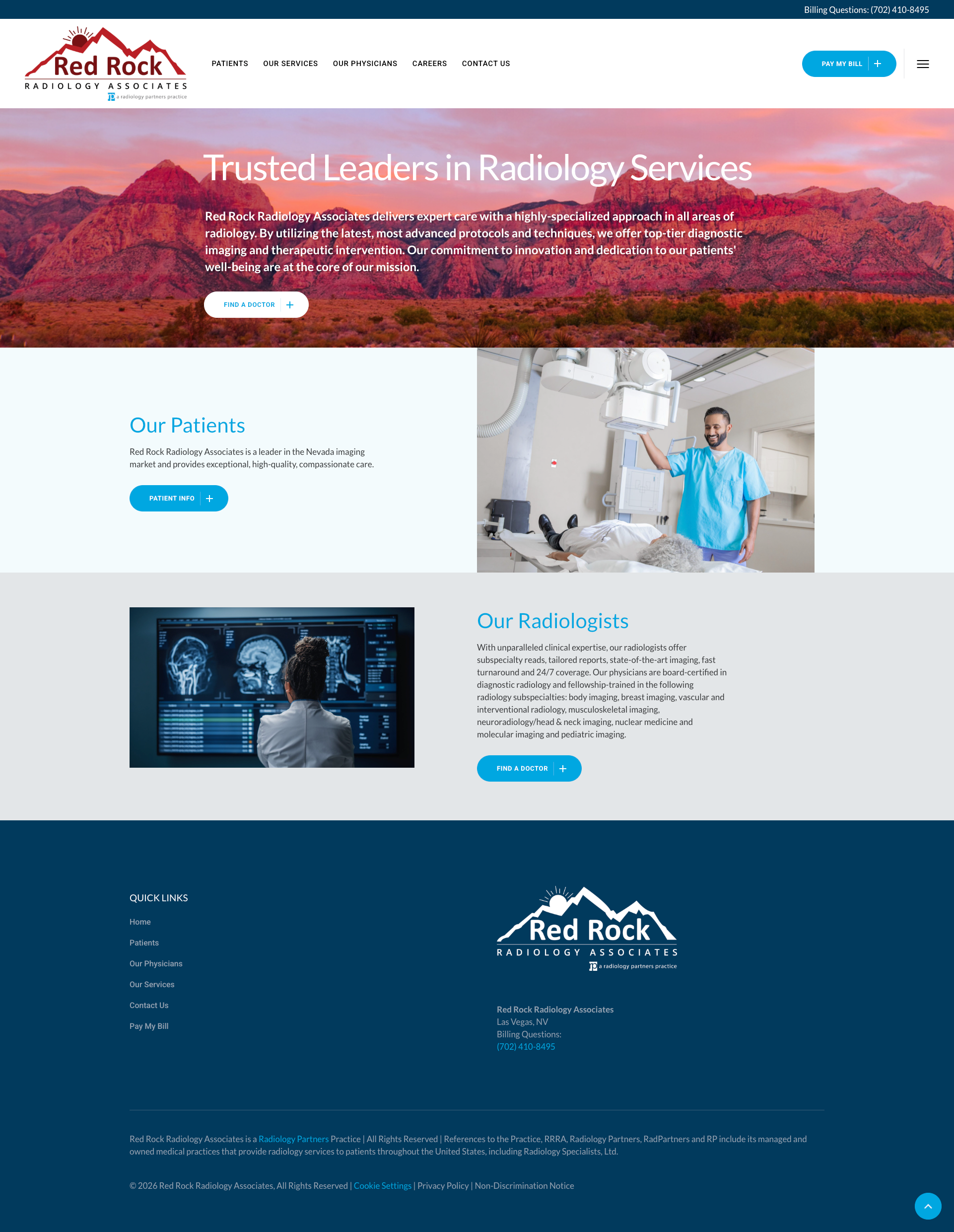
Physician page
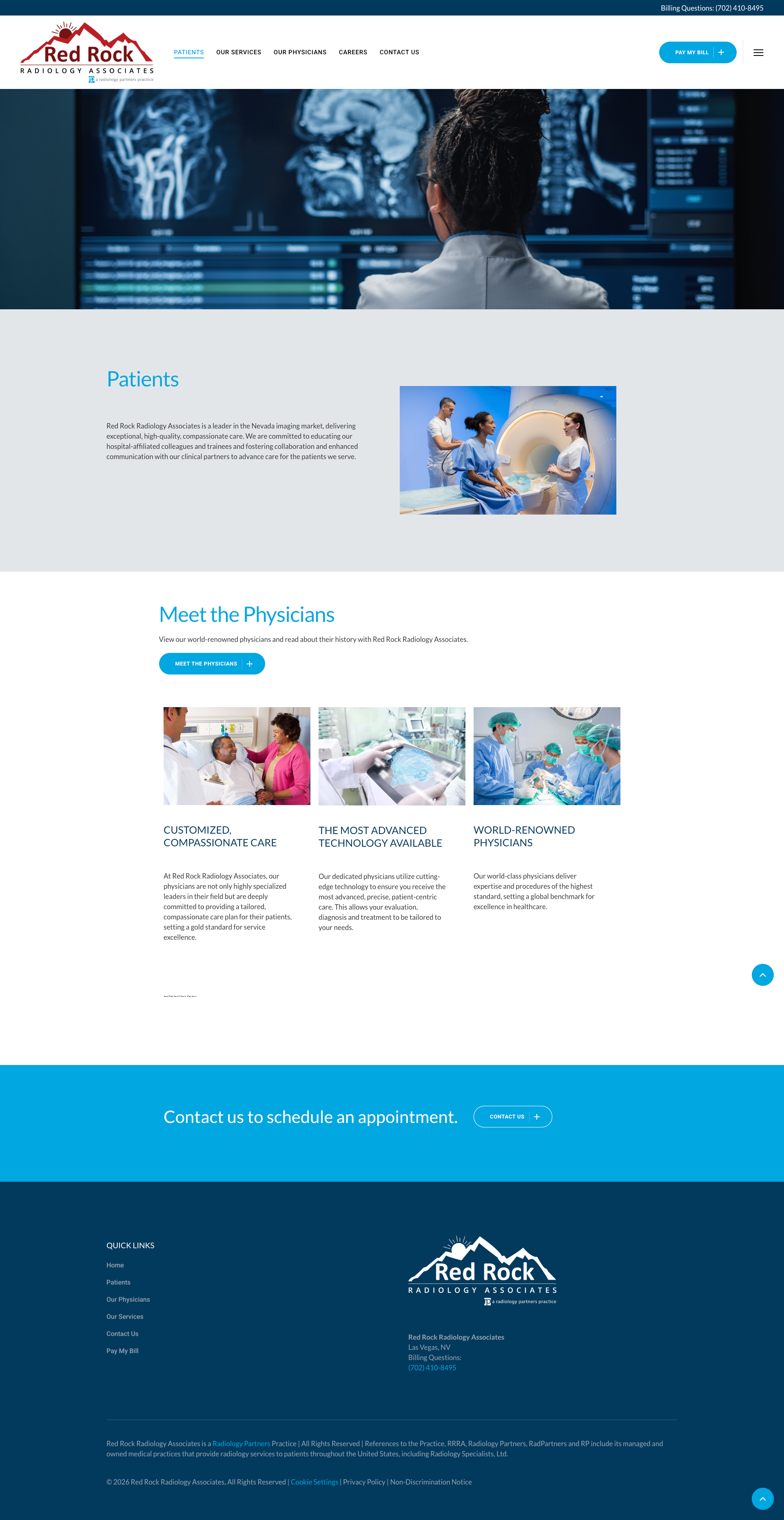
Patients page
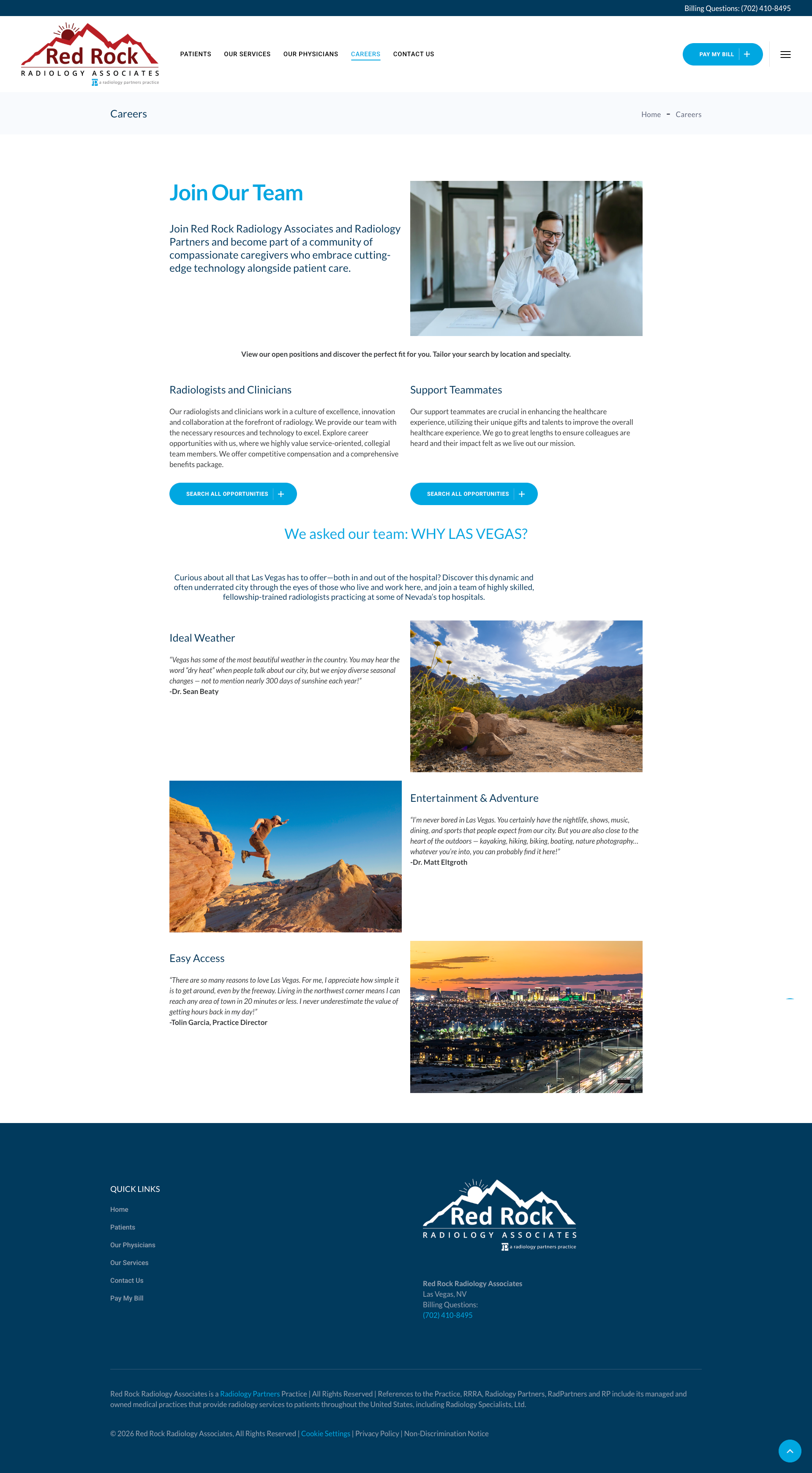
Careers page
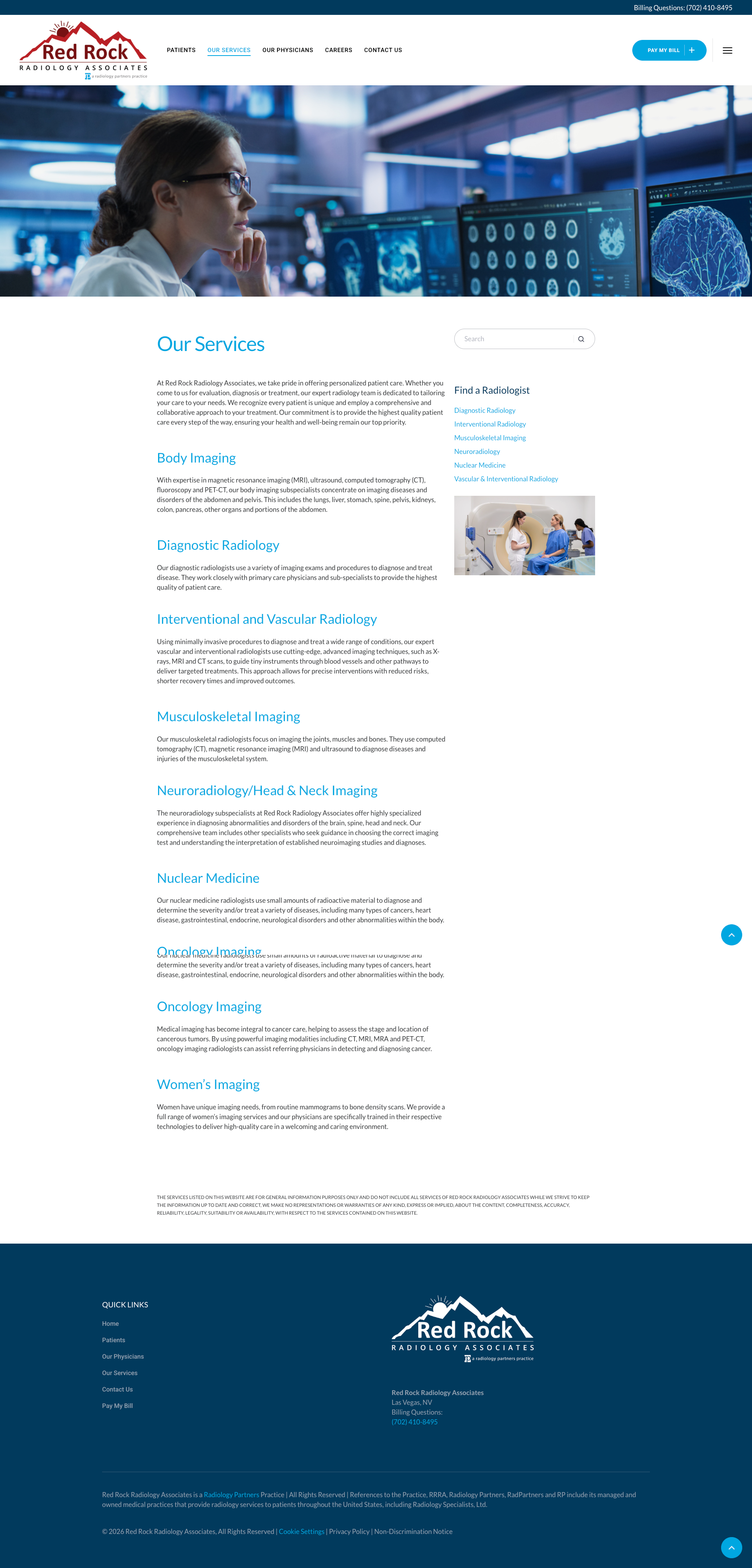
Services page
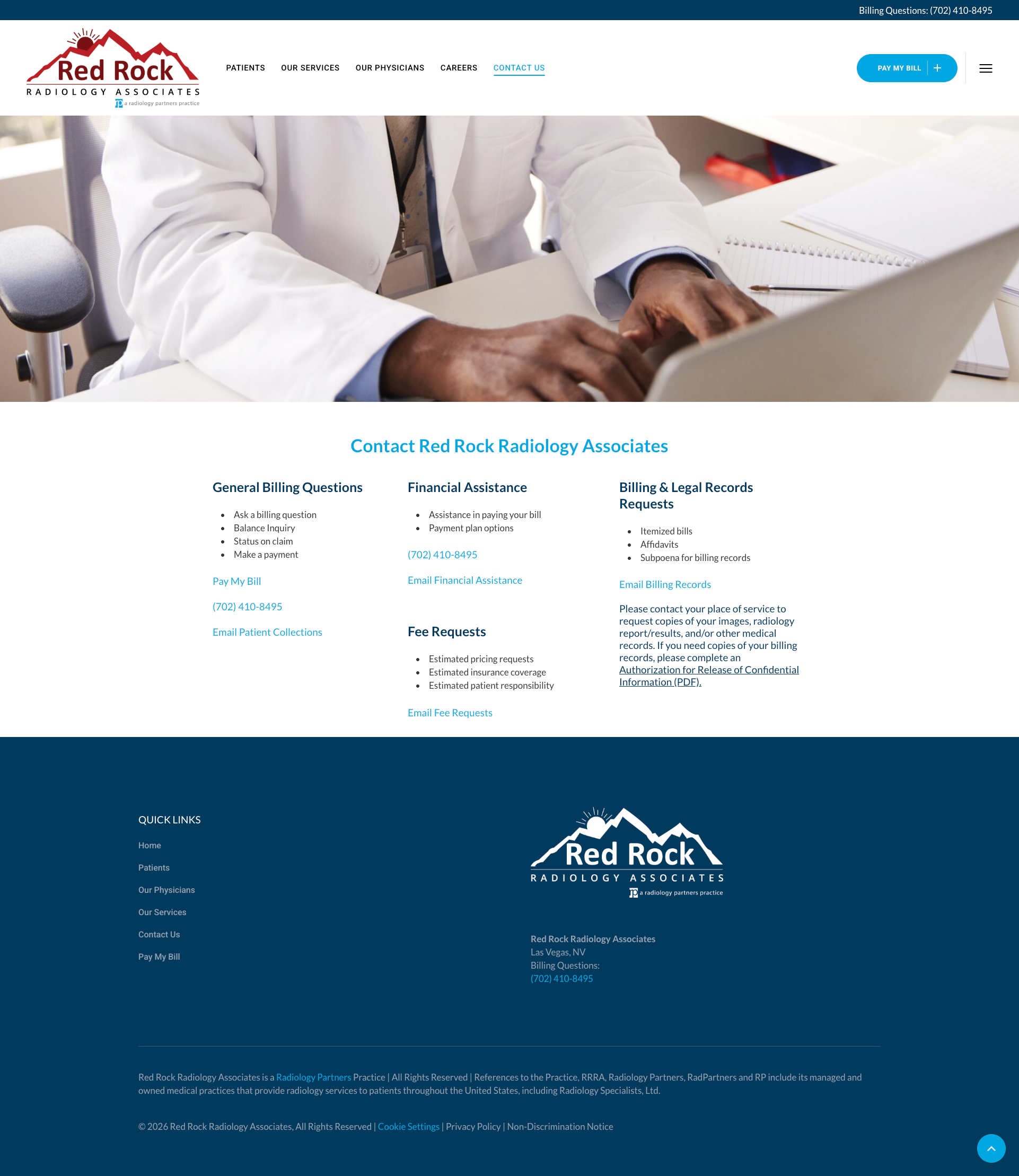
Contact Us page
Implementation
Once the framework was established, I began transitioning sites into the new system.
This included:
rebuilding websites in WordPress
migrating externally hosted sites in-house
implementing the shared template system
simplifying navigation and removing unnecessary content clutter
A major focus was decluttering the experience and guiding users toward the most common tasks.

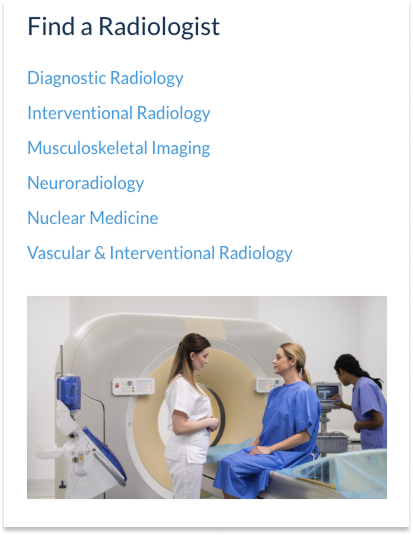
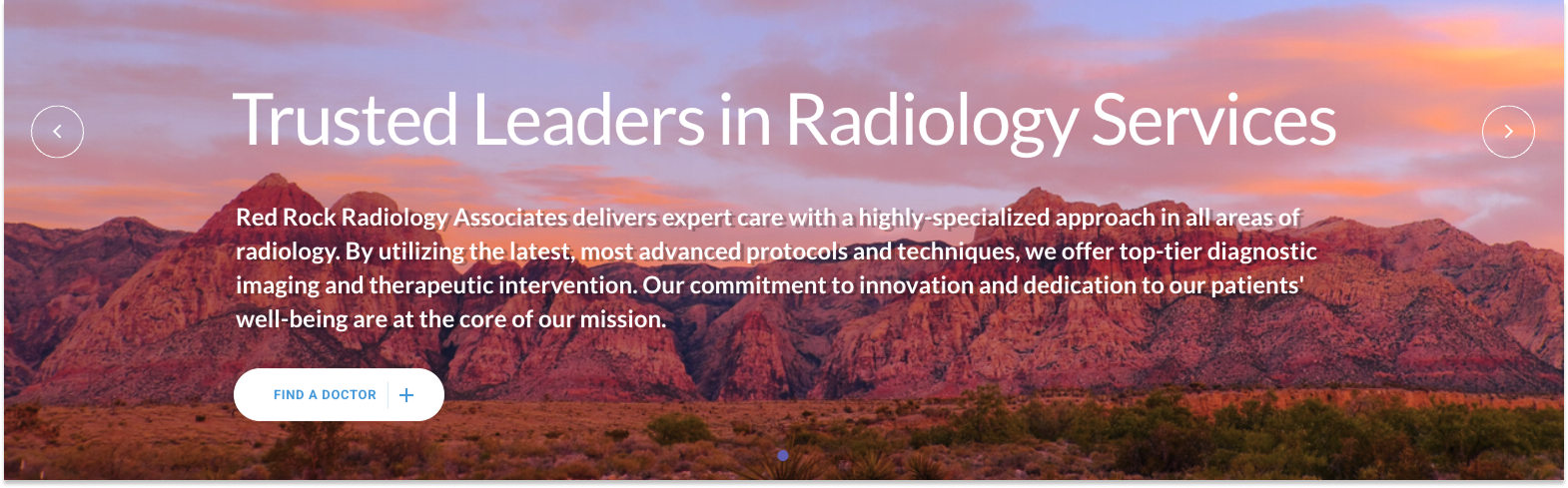
Impact
This work resulted in a more cohesive and scalable digital ecosystem across all affiliate healthcare websites.
Key outcomes included:
Centralization of 35+ websites into a unified CMS environment
Significant reduction in hosting and maintenance overhead (approx. $870K+ in annual savings)
Improved consistency and usability across 50+ healthcare websites
Stronger accessibility foundations embedded into system-level design and development practices
Increased engagement within key user journeys, including a 30% lift in career portal interactions
Beyond individual improvements, this phase established a more sustainable model for managing and evolving a large-scale healthcare web ecosystem.
Homepage before redesign
After redesign
Next Phase
Future work will focus on continuing to evolve the healthcare website ecosystem into a more streamlined and user-centered experience, with an emphasis on improving navigation, consistency, and overall discoverability across sites.