


CASE STUDY
Accessibility Initiative at Radiology Partners
Building an accessibility foundation for Radiology Partners
Role: UX Designer, Accessibility Lead
Team: Digital Experience
Timeline: 2024–Present
Scope: Accessibility auditing, WCAG compliance strategy, accessibility education, leadership presentations, project planning, cross-functional collaboration, implementation oversight, content accessibility, usability evaluation, and phased remediation planning
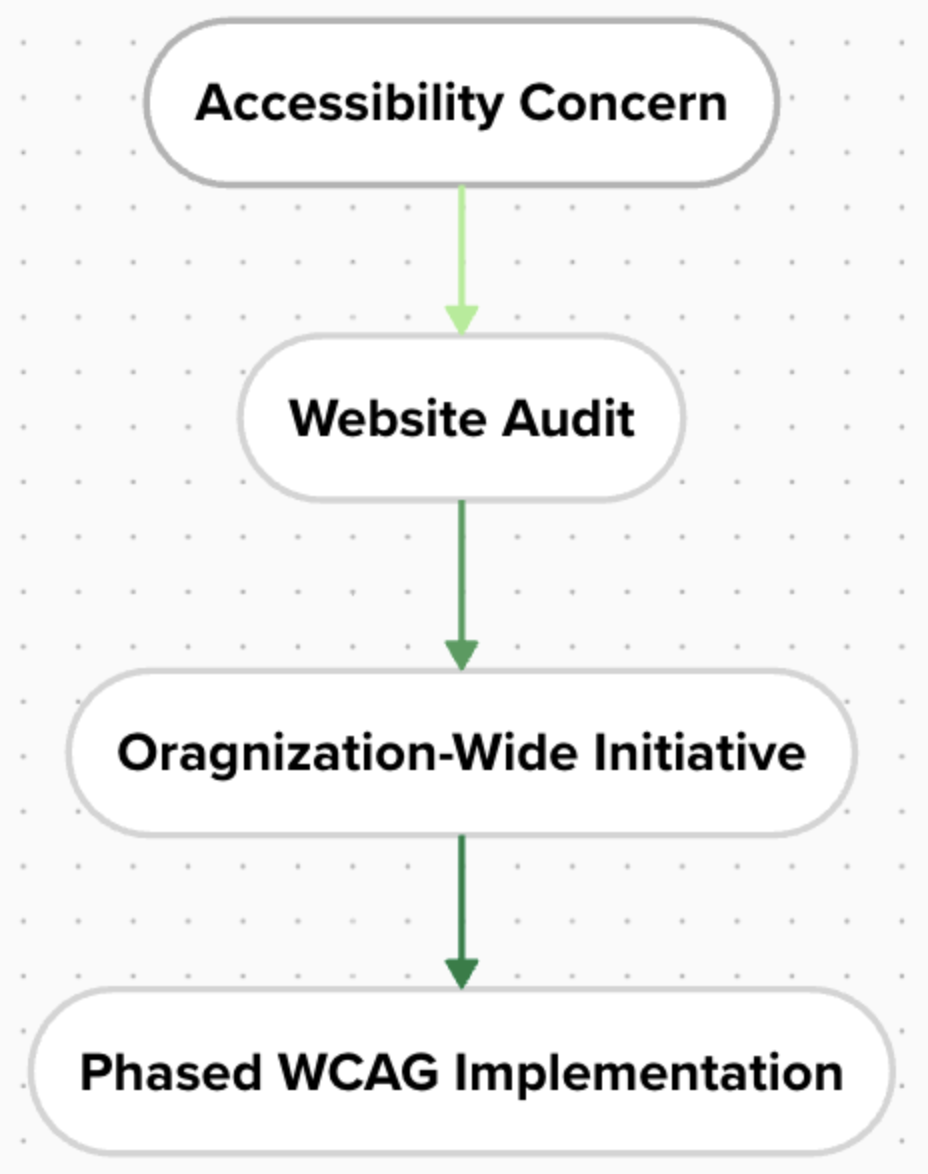
How accessibility strategy became a cross-functional digital initiative at Radiology Partners
product + brand + platform evolution over time.
What began as an effort to better understand digital accessibility standards evolved into a broader initiative to improve usability, inclusivity, and digital quality across Radiology Partners’ web experiences.
The original goal was straightforward — audit and improve accessibility on radpartners.com. But as research and audits progressed, it became clear the challenge extended beyond isolated fixes. Accessibility gaps existed across design, content structure, development patterns, and internal workflows.
This project ultimately shifted from a website accessibility audit into the foundation for a scalable accessibility program — including leadership alignment, team education, governance planning, and phased WCAG implementation across the organization.
The Recognizing the Gap
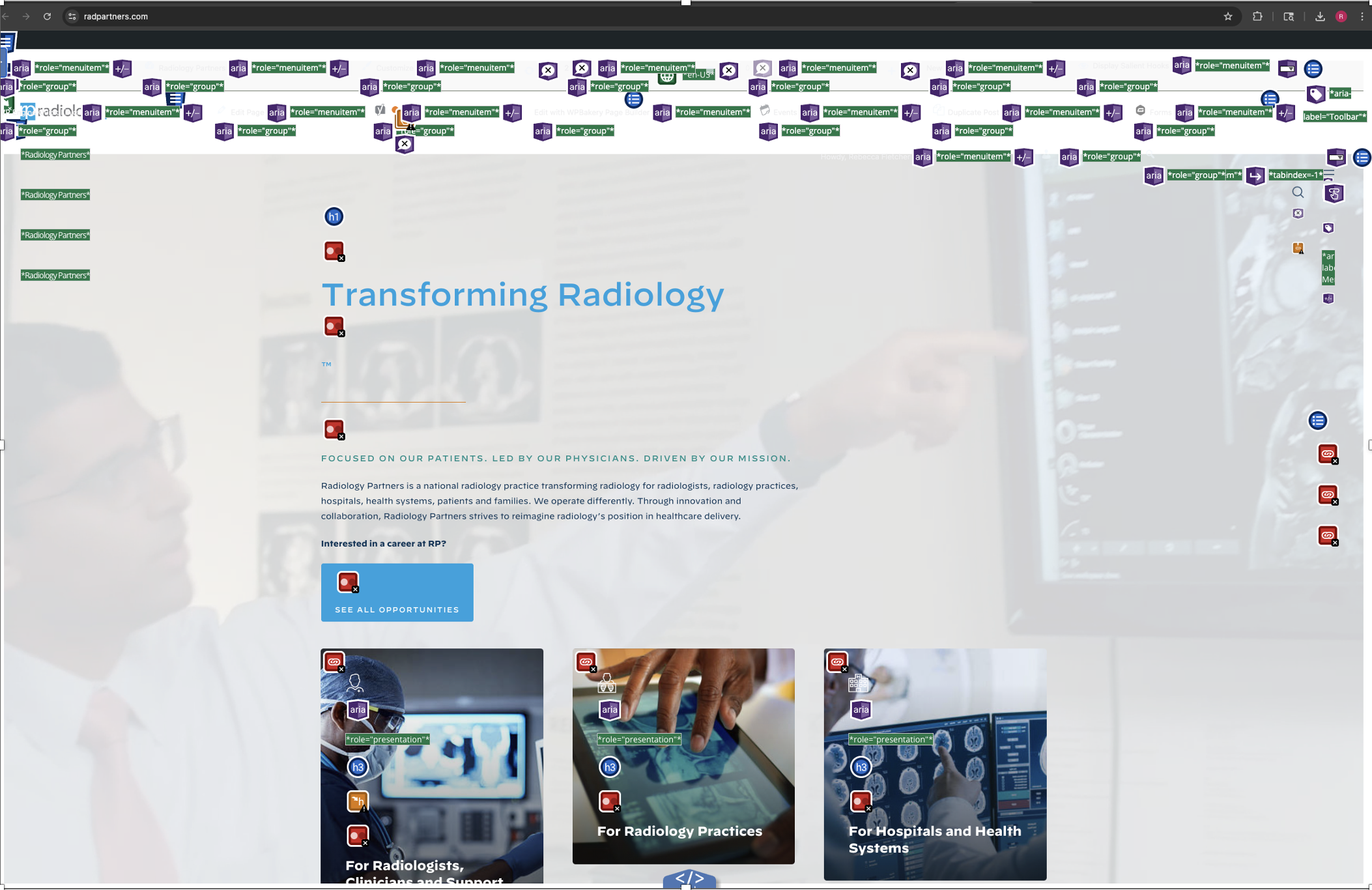
While managing and supporting multiple Radiology Partners web properties, I began noticing recurring accessibility and usability issues across our digital experiences.
Examples included:
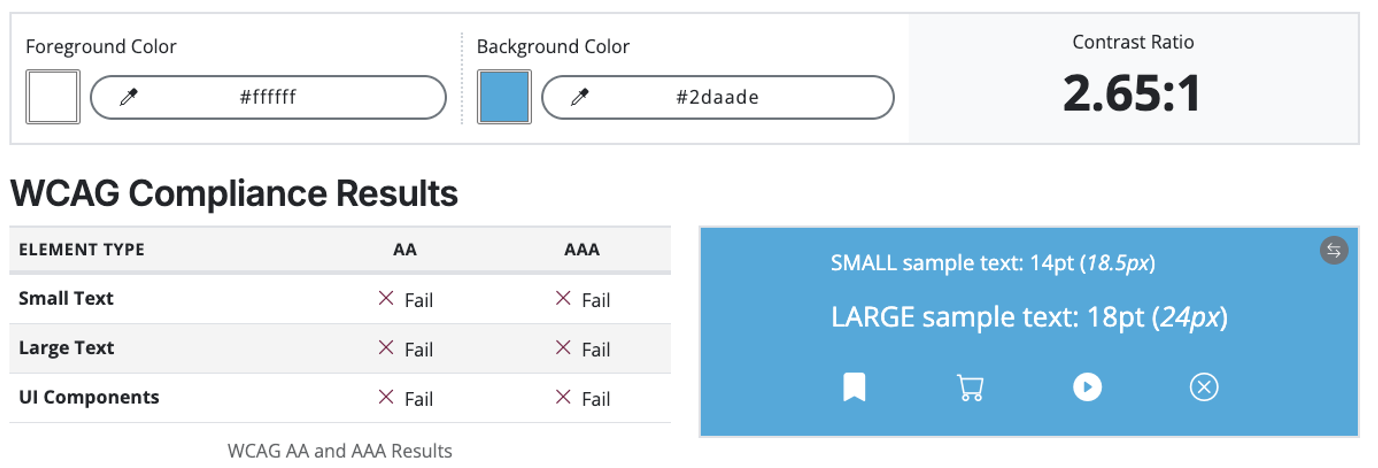
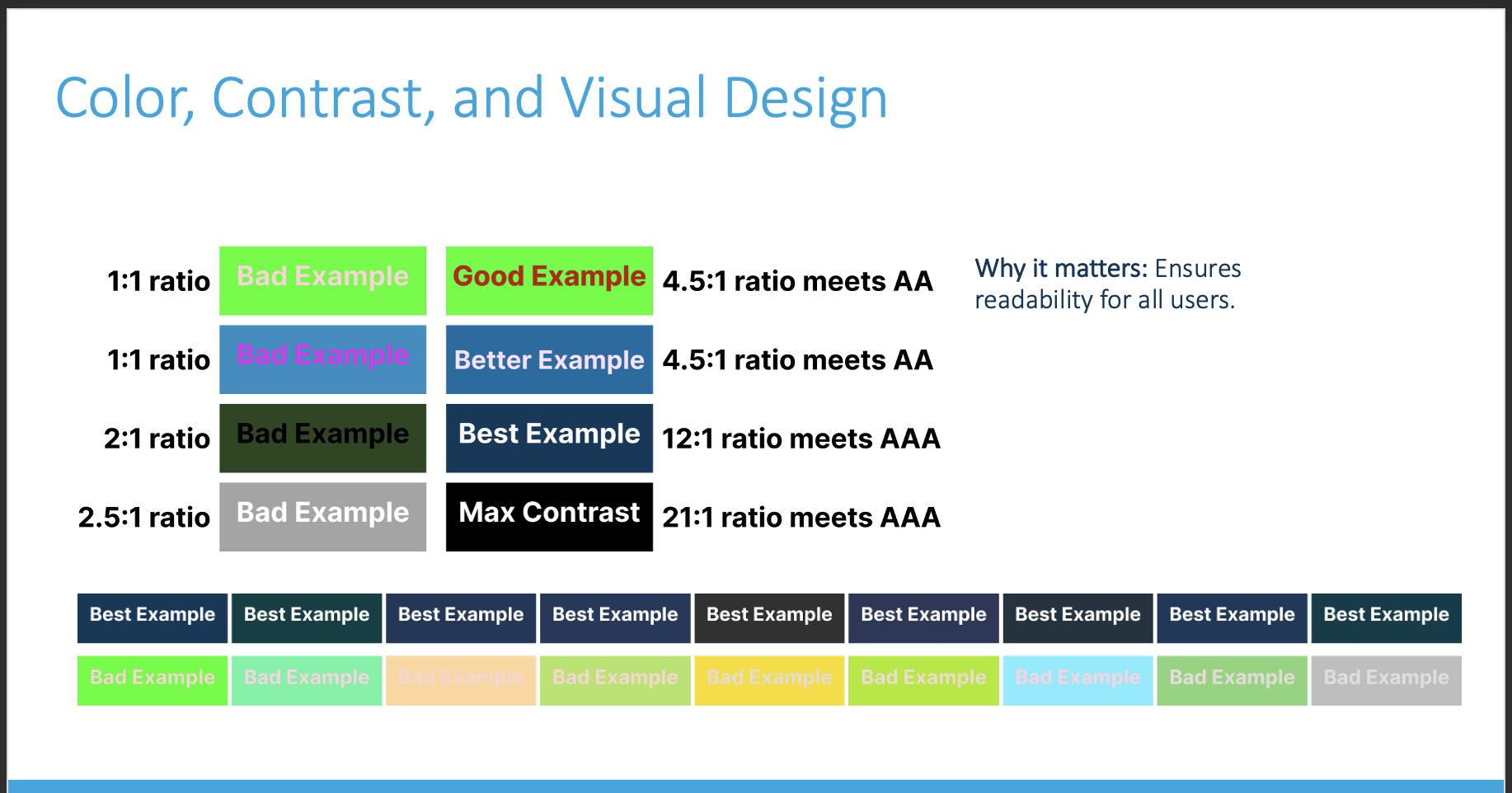
Low color contrast reducing readability
Missing or inconsistent heading structure
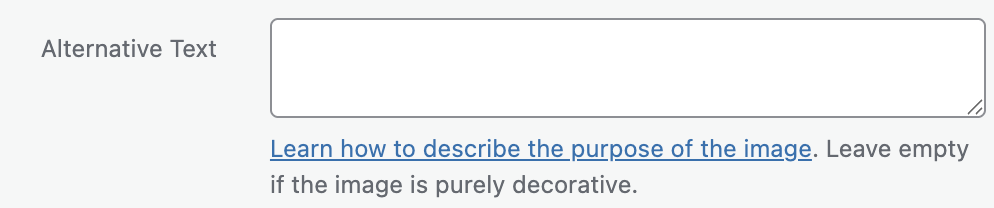
Lack of descriptive alt text
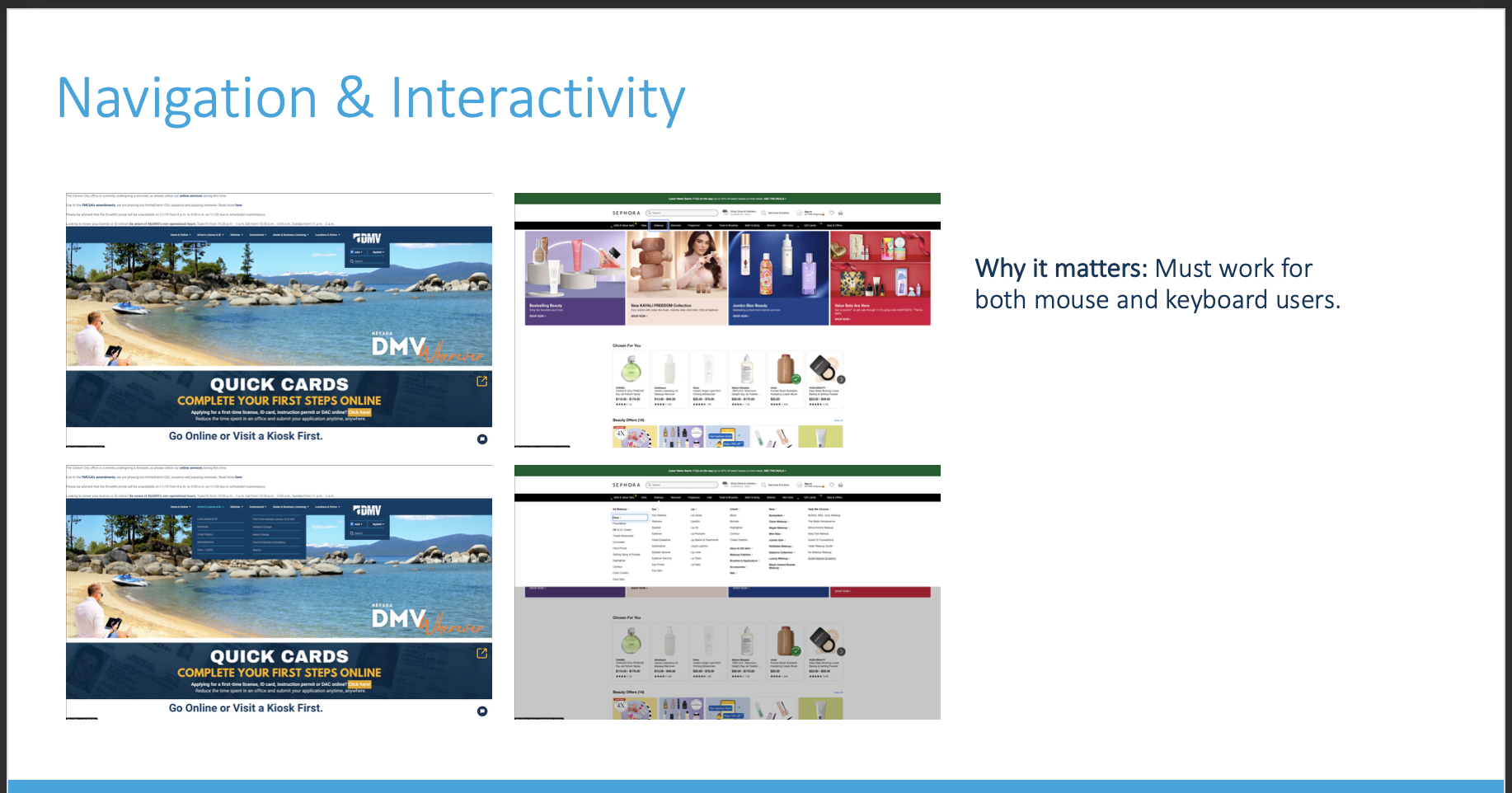
Keyboard navigation issues
Inconsistent semantic structure
Accessibility barriers introduced through visual components and page builder tools
As a healthcare organization, accessibility was not only a compliance consideration, but also a user experience responsibility.
The existing workflow relied heavily on visual QA and traditional marketing review processes, but accessibility standards had never been formally integrated into the organization’s digital practices.
My Role
As the Digital Experience Designer and Accessibility expert I led:
Accessibility research and education
WCAG certification and self-education
Accessibility auditing and issue identification
Tool evaluation and implementation recommendations
Executive presentations and stakeholder alignment
Project planning and phased rollout strategy
Internal accessibility education and process development
Phase 1 implementation leadership
Building the Foundation
Accessibility Education & Certification
Before proposing organizational changes, I wanted to strengthen my own understanding of accessibility standards and implementation best practices.
To build that foundation, I:
Earned an accessibility certification
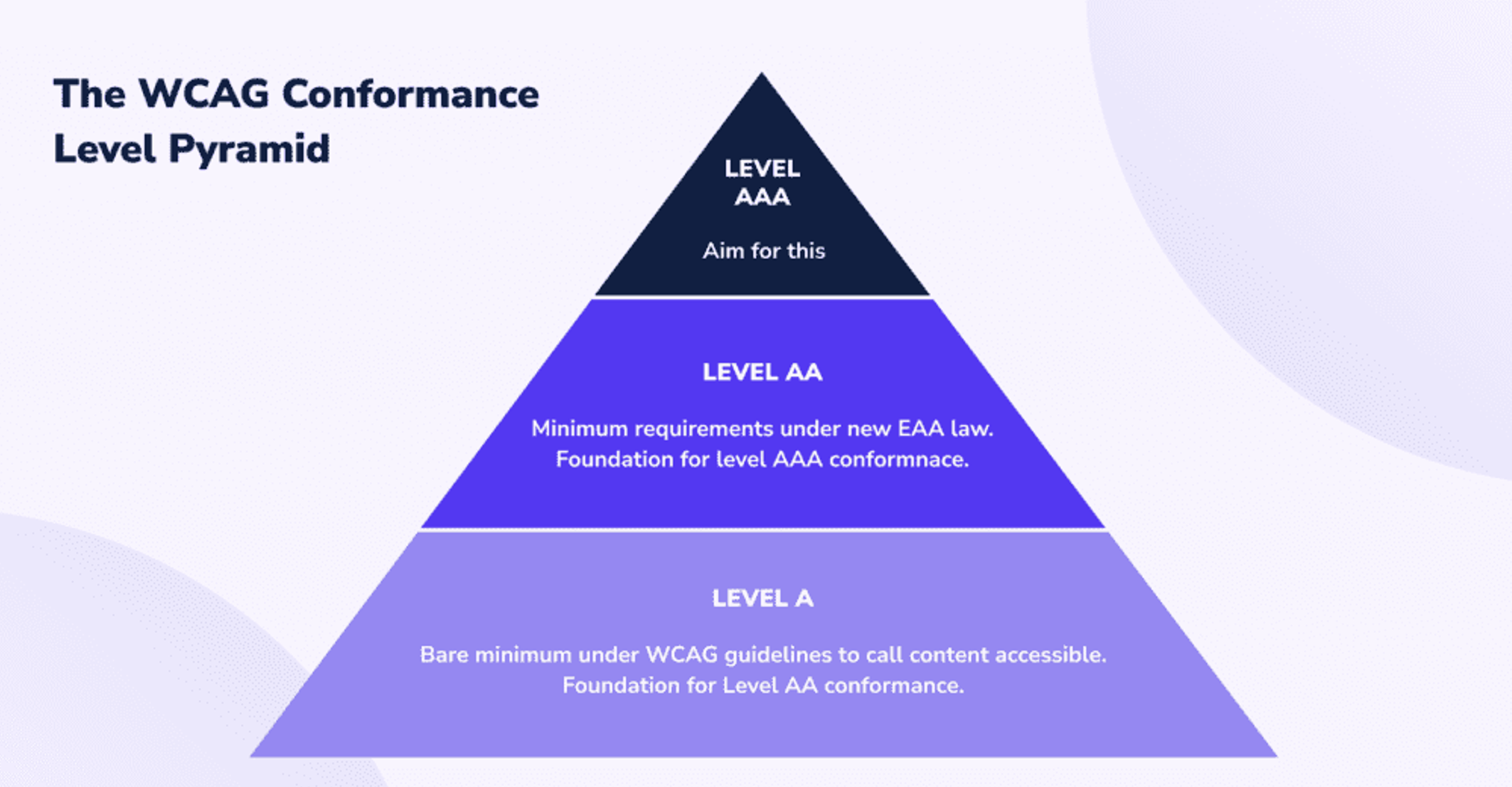
Studied WCAG AA and AAA standards
Researched accessibility workflows and implementation strategies
Learned how accessibility intersects with UX, content strategy, and development
Evaluated accessibility testing methodologies and tooling
This phase was critical in helping translate accessibility from a broad concept into actionable, scalable processes.
Selecting Accessibility Tooling
To support accessibility improvements at scale, I evaluated several auditing and monitoring tools based on usability, reporting clarity, workflow integration, and scalability.
We selected Pope Tech as our primary accessibility platform due to its:
Site-wide scanning capabilities
Clear issue reporting
Educational remediation guidance
Ease of use for both technical and non-technical teams
Pope Tech became the foundation for auditing, prioritization, progress tracking, and ongoing monitoring.
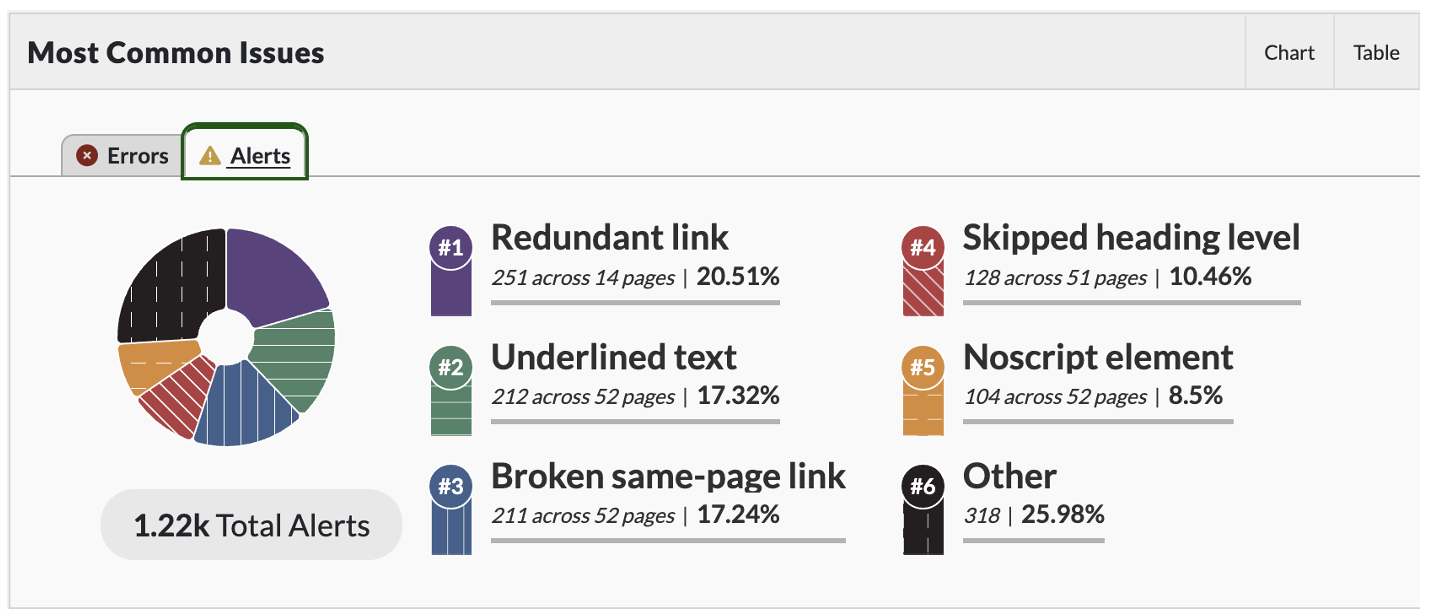
Accessibility Audit
Auditing radpartners.com
Using Pope Tech alongside manual testing, I conducted a broad accessibility audit of radpartners.com.
The audit included:
Automated accessibility scans
Manual keyboard navigation testing
Semantic structure review
Color contrast testing
Content and link clarity evaluation
Zoom and responsiveness testing
ARIA and hidden content review
Key Findings
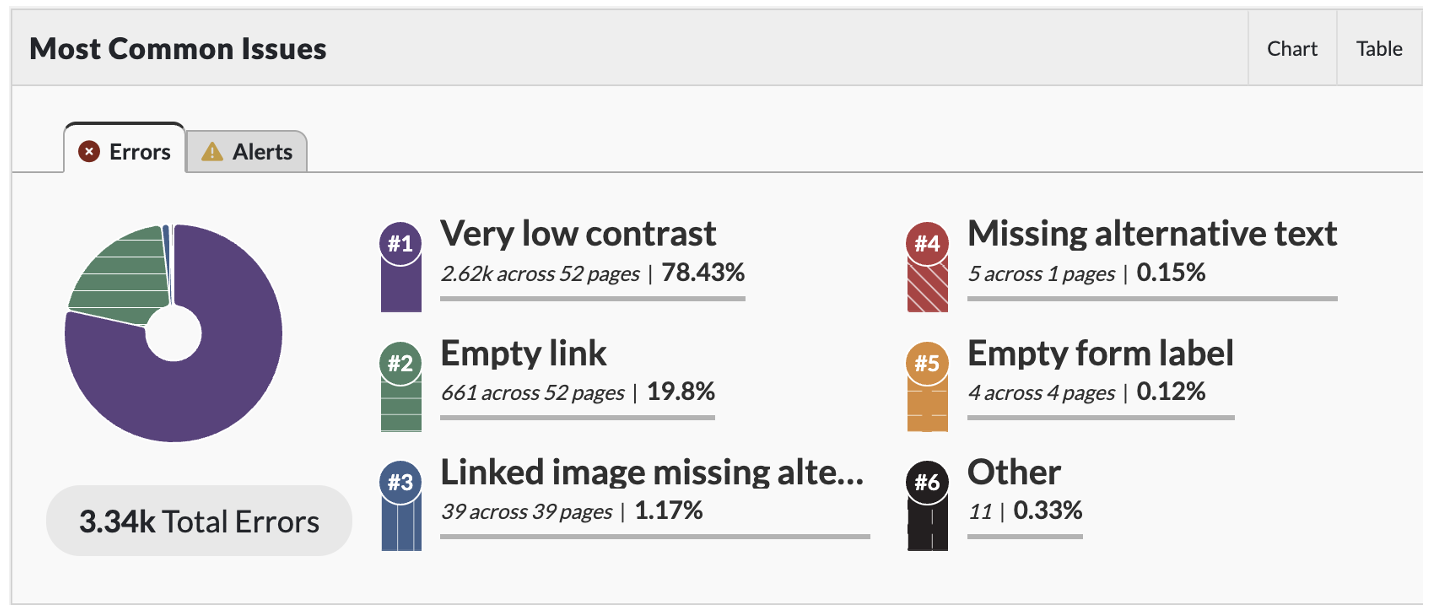
Initial scans revealed widespread accessibility opportunities across the site.
Common issues included:
Low color contrast
Missing or inconsistent heading hierarchy
Missing alt text
Generic link text
Keyboard navigation issues
Carousel usability barriers
Semantic structure inconsistencies
Responsiveness issues at 400% zoom
The audit helped identify both:
High-impact quick wins
Longer-term structural improvements

Creating a Phased Accessibility Roadmap
Rather than attempting a full redesign or complete remediation all at once, I developed a phased implementation strategy focused on balancing impact, effort, and organizational readiness.
Phase 1: Foundational Improvements
Low-effort, high-impact updates:
Color contrast
Alt text
Heading structure
Future Phases
Additional phases will address:
Link clarity and semantic improvements
Keyboard navigation
ARIA implementation
Carousel usability
Responsive and zoom behavior
Broader UX and component-level accessibility improvements
This phased approach helped make the initiative feel realistic, approachable, and scalable.
Defining the Strategy


Securing Leadership Buy-In
Presenting the Opportunity
To move the initiative forward, I created and delivered an accessibility presentation for marketing leadership.
The presentation focused on:
What accessibility is
Why it matters
Current accessibility gaps
Business and user impact
WCAG AA vs AAA standards
Recommended implementation strategy
Phased roadmap and ownership model
The goal was not simply to highlight problems, but to demonstrate a realistic path forward.
Outcome
Leadership approved the initiative and supported moving forward with a phased accessibility improvement strategy using radpartners.com as the pilot site.
Educating the Team
Accessibility Training & Internal Enablement
Following leadership approval, I began building educational resources and implementation guides for the marketing and communications team.
This included:
Accessibility presentations
Role-specific guidance
Simplified WCAG explanations
Real world examples
The goal was to make accessibility approachable and actionable for both technical and non-technical contributors.
Implementation (Current Phase)
Phase 1 In Progress
Implementation is currently underway for:
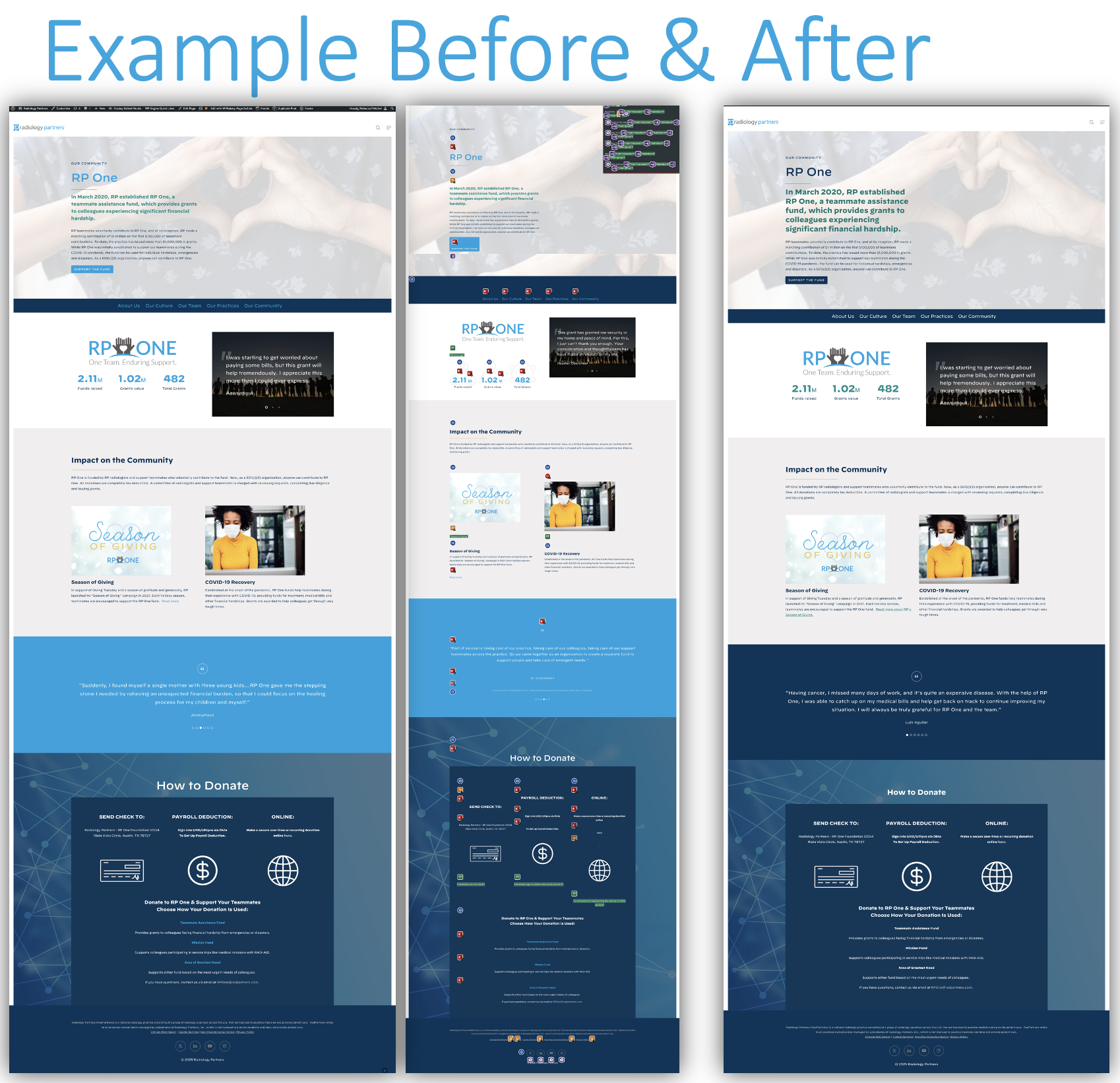
Color contrast improvements
Alt text remediation
Heading structure cleanup
The work includes:
Creating reusable workflows
Defining accessibility QA standards
Tracking progress through Asana
Re-scanning and validating updates through Pope Tech
This phase is also serving as a pilot process that can later be expanded across additional Radiology Partners web properties.
Early Impact
Organizational Shift
Even in the early stages, the initiative has already created meaningful organizational momentum.
Outcomes so far include:
Leadership alignment and approval
Increased accessibility awareness across marketing
Introduction of accessibility into digital workflows
Establishment of accessibility review processes
Creation of scalable implementation documentation
Improved collaboration between design, content, and development stakeholders
Current Status
In Progress
This case study reflects an active, ongoing accessibility initiative.
Future updates will include:
Implementation outcomes
Before/after accessibility improvements
Metrics and accessibility score improvements
Expanded remediation phases
Team adoption and process evolution
Long-term accessibility governance strategy